

The Legal Creator’s Guide to AI Voice Cloning for Audiobooks
December 22, 2025 | by mk75089317@gmail.com

Learn how to use AI voice cloning for audiobook narration legally. Understand copyright, voice licensing, platform rules, and ethical best practices to monetize safely. Beginner-friendly guide.
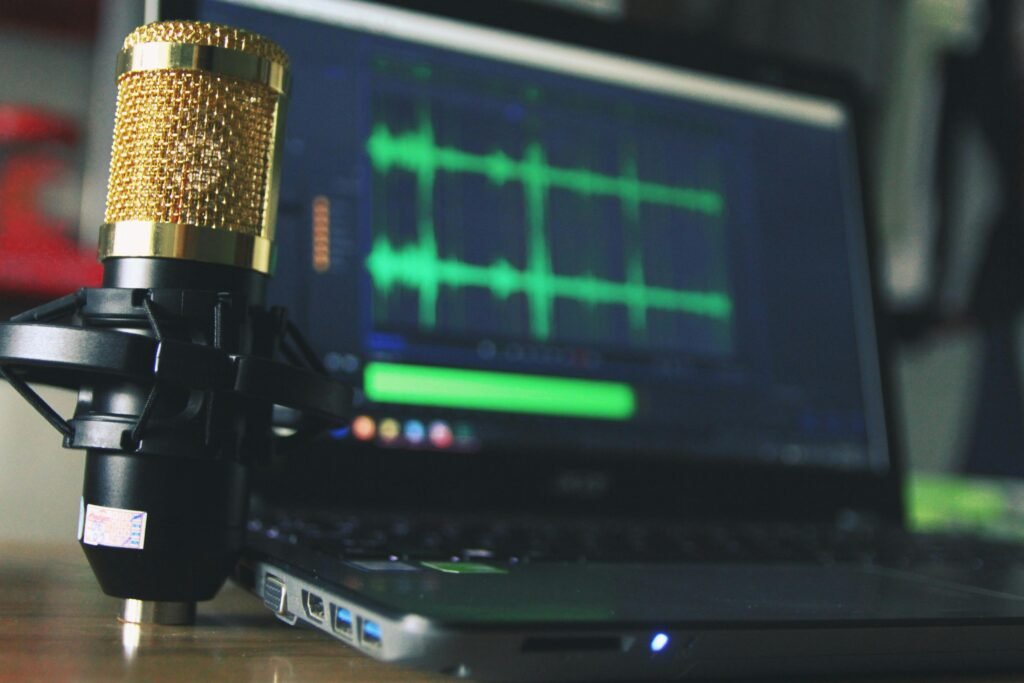
*Introduction: The New Frontier of Audiobook Narration*
The audiobook market is booming, but professional narration can cost thousands of dollars. Enter AI voice cloning: a technology that promises studio-quality narration at a fraction of the cost.
But is it legal? The short answer is: **It can be, if you navigate the rules carefully.**
This guide is your roadmap. We’ll cut through the hype and provide a clear, legally-informed path to using AI voice cloning for audiobook creation without risking lawsuits or platform bans.
**What is AI Voice Cloning, Really?**
AI voice cloning is a subset of speech synthesis. It uses deep learning algorithms to analyze a sample of a human voice and create a digital model that can generate new speech in that voice.
For audiobooks, this means you can theoretically have a consistent, expressive narrator for your entire series without booking a recording studio.
**How AI Voice Cloning Works for Audiobook Production**
The process typically involves three steps:
1. **Data Input:** You provide a high-quality audio sample of a voice—anywhere from a few minutes to several hours.
2. **Model Training:** The AI analyzes the vocal characteristics: pitch, tone, cadence, accent, and emotional inflections.
3. **Synthesis:** You feed text into the trained model, and it generates new audio that sounds like the original speaker reading your book.
**A Critical Distinction: Synthetic Voices vs. Cloned Real Voices**
This is the most important legal and ethical line in the sand.
* **Synthetic AI Voices (Legally Safer):** These are original voices generated by AI companies. They are not based on a specific, real person without their consent. The voice is a unique creation, and the provider (like ElevenLabs, Play.ht, or Murf.ai) typically grants you a commercial license to use it.
* **Cloned Real Voices (Legal Minefield):** This is where you clone the voice of a real person—a celebrity, a famous narrator, or even a friend. Using this without explicit, written consent is where most legal troubles begin.
**Navigating the Legal Labyrinth: Risks You Must Understand**
Ignorance isn’t a defense in copyright court. Before you generate a single word, understand these three core legal concepts.
**1. Copyright Law & the “Performance”**
An audiobook isn’t just your text; it’s a **performance** of your text. U.S. copyright law protects “audio-visual works,” which includes sound recordings.
* **Your Role:** You own the copyright to the book’s text.
* **The AI’s Role:** The AI-generated narration creates a new, separate copyright in the sound recording. Who owns this? It depends entirely on the **Terms of Service** of the AI tool you use.
https://www.copyright.gov/engage/musicians
**2. Right of Publicity / Personality Rights**
This is the biggest risk with cloning real voices. Nearly every U.S. state recognizes a “right of publicity.” It prevents the unauthorized commercial use of an individual’s name, likeness, or other recognizable aspects of their identity—**which includes their distinctive voice.**
* **Real-World Example:** A famous case involved Bette Midler suing Ford for using a sound-alike singer in a commercial. The court ruled it violated her right to publicity. Cloning Morgan Freeman’s voice for your audiobook without permission would invite a swift, costly lawsuit.
https://www.law.cornell.edu/wex/right_of_publicity
**3. The Foundation of It All: Consent**
Consent transforms an illegal act into a legal one. For AI voice cloning to be ethical and legal, you need:
* **Informed Consent:** The voice donor knows their voice will be cloned for an audiobook.
* **Written Consent:** A signed agreement is non-negotiable for professionals.
* **Commercial Consent:** Permission must explicitly cover commercial use, distribution, and monetization.
**When Is AI Voice Cloning Legal? When Is It Illegal?**
Let’s apply these principles to clear scenarios.
**LEGAL Use Cases (The Safe Paths)**
* **Using a Platform’s Licensed Synthetic Voice:** You use ElevenLabs’ “Adam” voice or a similar proprietary, non-real-person voice that comes with a clear commercial license in their terms.
* **Cloning Your Own Voice:** You clone your own voice. You own your identity and give yourself consent.
* **Cloning with Explicit Permission:** You hire a voice actor and your contract **explicitly states** they grant you the rights to clone their voice for this audiobook and future projects. (This is becoming a new service offering).
* **Using Voices from “Royalty-Free” Marketplaces:** You purchase a voice model from a marketplace where the contributor has legally agreed to place it for commercial cloning use.

**ILLEGAL Use Cases (Fast Track to Trouble)**
* **Cloning a Celebrity/Narrator’s Voice:** Using samples from YouTube, podcasts, or movies to clone a famous voice without permission.
* **Cloning a Friend/Colleague’s Voice as a “Favor”:** Verbal permission is weak. Without written commercial consent, they could later claim infringement.
* **Bypassing Watermarks/ToS:** Using a tool in violation of its Terms of Service (e.g., using a “research only” model for commercial audiobooks).
* **Implying a Celebrity Endorsement:** Using a cloned voice that sounds *confusingly similar* to a famous person to imply they endorse your book.
https://support.google.com/youtube/answer/2801947
**Platform Rules: Getting Past the Gatekeepers**
Creating your audiobook is one thing. Distributing it is another. Major platforms have their own rules.
* **Amazon ACX / Audible:** They require that audiobooks meet “Audio Submission Requirements.” They do not explicitly ban AI-narrated audiobooks, **but** they require you to own or control all rights to the audio. If you used an AI voice, you must confirm you have the **commercial license** to use it. Misrepresentation can lead to removal and account suspension.
* **YouTube:** Its policies prohibit misleading content. Uploading an audiobook with a voice cloned to mimic a celebrity could be taken down for impersonation.
* **Google Play & Apple Books:** Their guidelines require you to hold necessary publishing rights. The burden of proof is on you.
**Best Practice:** Always disclose to your distributor that the narration is AI-generated if asked. Hiding it is a breach of trust and terms.
**Your Actionable Legal Safety Checklist**
Follow these steps to build your audiobook on a solid legal foundation.
1. **Choose Your Voice Source Wisely:**
* **Path A (Safest):** Use a synthetic voice from a reputable AI voice platform.
* **Path B (Secure):** Clone your own voice.
* **Path C (Contractual):** Officially license a voice actor’s clone or a commercially-licensed voice model.
2. **Dissect the Terms of Service (ToS):** Before paying for any tool, read its **License Agreement**. Look for:
* “Commercial use allowed”
* “You own the output”
* Clarity on whether the voice is an original synthetic creation.
3. **Secure Written Consent (If Using a Real Person):** A contract should state:
* The purpose (audiobook narration for [Title]).
* Grant of rights to clone and use the voice.
* Territory (worldwide) and term (perpetual).
* Compensation details.
* **Consult a media lawyer for this.**
4. **Keep Immaculate Records:** Save copies of licenses, consent forms, and ToS. Document which tool and specific voice you used.
5. **Be Transparent with Your Audience:** Consider an “AI-Narrated” disclaimer in the book description. It builds trust and manages expectations.
**Ethical Considerations: Building Trust in the AI Era**
Legal is the minimum. Ethical is best practice. Adhering to ethical principles also signals quality to Google’s EEAT (Experience, Expertise, Authoritativeness, Trustworthiness) framework.
* **Transparency:** Don’t try to fool listeners into thinking a cloned voice is the real celebrity.
* **Fair Compensation:** If AI replaces a human job in your workflow, consider the societal impact. Supporting voice actors who license their clones is an ethical middle ground.
* **Quality & Respect:** Use the technology to create quality content that respects listeners and the creative community.
**FAQ Section**
**Q: Is AI voice cloning for audiobooks legal?**
**A:** It can be, but it is highly situation-dependent. Using a commercially-licensed synthetic AI voice or cloning your own voice is generally legal. Cloning someone else’s voice without permission is illegal.
**Q: Can I monetize audiobooks with AI voices on Audible?**
**A:** Yes, provided you have the commercial rights to use the AI voice and you accurately represent your audiobook during Audible’s submission process.
**Q: Do I own the copyright to an AI-narrated audiobook?**
**A:** You own the copyright to the sound recording **if** the AI tool’s Terms of Service grants you ownership of the output. You always retain copyright to the underlying text.
**Q: What is the biggest legal mistake creators make?**
**A:** Assuming that because a voice cloning tool is publicly accessible, using its output for commercial audiobooks is automatically legal. The tool may be for personal use only, or the voice model may be based on unlicensed data.
**Q: Can I clone the voice of a deceased person?**
**A:** This is a gray area. Rights of publicity can extend after death (for 70-100 years in some states, like California). Estate lawyers actively protect these rights. It is high-risk without estate permission.
**Tools & The Importance of Licensing**
When evaluating AI voice tools (like ElevenLabs, Play.ht, Murf.ai, Resemble AI, or Descript), your primary question should not be about price or quality first—it should be about **licensing**.
Navigate to their “License,” “Terms of Use,” or “Commercial Rights” page. A reputable company will clearly state what you can and cannot do with the generated audio. If this information is hidden or vague, consider it a red flag.
**Conclusion: Your Path Forward**
AI voice cloning is a powerful tool that is democratizing audiobook creation. The path to using it legally is not complicated, but it requires diligence.
**Summary of Key Takeaways:**
1. **The Line:** Synthetic voices are safer; cloning real voices is legally hazardous without consent.
2. **The Foundation:** Your rights come from the tool’s **Terms of Service** and any **written consent** agreements.
3. **The Rule:** When in doubt, choose the path of explicit permission and transparency.
4. **The Goal:** Create amazing content while respecting the law and the rights of individuals.
**Your Next Steps:**
1. **Define your project** and budget.
2. **Research tools** based on their licensing terms, not just demos.
3. **Choose your legal path** (synthetic, own voice, or licensed clone).
4. **Create, distribute transparently,** and keep your documentation organized.
The future of content creation is human creativity amplified by responsible AI use. By prioritizing legal and ethical practices today, you build a sustainable, reputable creative business for tomorrow.
**Disclaimer:** *This blog post is for informational and educational purposes only. It does not constitute legal advice. The legal landscape surrounding AI and copyright is evolving rapidly. You should consult with a qualified intellectual property attorney for advice on your specific situation before publishing or distributing any AI-generated content.*
RELATED POSTS
View all


Creating a Modern SEO-Optimized Blogging Website
December 19, 2025 | by mk75089317@gmail.com
Profitable AI Automation Services: Make Money Building Smart AI Workflows in 2026
January 13, 2026 | by mk75089317@gmail.com
Payoneer Se Paise Receive Kaise Kare Freelancing Ke Liye – Complete Step-by-Step Guide (2026)
February 1, 2026 | by mk75089317@gmail.com