

From Idea to Income: Starting an AI Automation Agency in 2026
January 25, 2026 | by mk75089317@gmail.com

Introduction – Why AI Automation Agencies Are Booming in 2026
Let’s be honest. The business world is tired of the hype. They’ve heard “AI will change everything” for years. But in 2026, something shifted. The talk turned into tangible, bankable results. Small businesses, once left behind by complex tech, are now seeing their competitors use AI to answer emails, book appointments, and close sales—all without a human lifting a finger.
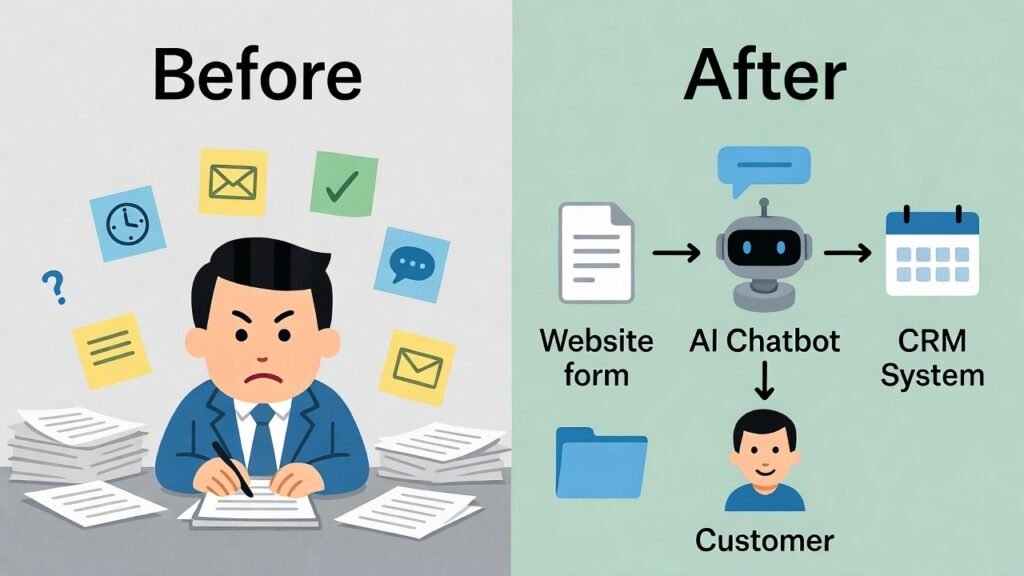
This isn’t about the future; it’s about the urgent present. An AI Automation Agency bridges that gap. It’s a service business that identifies repetitive, time-consuming tasks in a company and builds automated systems to handle them. Think of it as hiring a super-efficient, digital employee that never sleeps.
If you’re reading this, you likely see the opportunity. The demand is exploding, the tools are mature, and the market is ready to pay. This guide isn’t about theory. It’s a practical, step-by-step blueprint for starting an AI Automation Agency from scratch and turning it into a real, sustainable income this year. By the end of this guide, you’ll have a clear action plan for starting your own AI automation agency in 2026.
Table of Contents
What Is an AI Automation Agency? (A Simple Explanation)
Forget the jargon. An AI Automation Agency is a modern digital services firm. Your product is time and efficiency.
You work with clients (typically small to medium-sized businesses) to find processes that are bogging them down. This could be:
- A real estate agent spending hours scheduling property viewings.
- A local HVAC company missing service calls because the phone rings after hours.
- An e-commerce store owner drowning in basic “Where’s my order?” questions.
You then design and implement a system using a combination of AI tools, no-code platforms, and smart integrations to automate that process. You don’t just hand them software; you deliver a complete, working solution.
The client gets back dozens of hours per month, reduces errors, and improves customer service. You get paid a significant fee for creating that value. It’s a classic win-win, powered by 2026’s most accessible technology.
Why 2026 Is the Best Time to Start an AI Automation Agency
You might think you missed the boat. You haven’t. In fact, 2026 might be the most strategic time yet to enter this space. Here’s why:
1. The Tools Are Democratized and Powerful. The barrier to entry has collapsed. You don’t need a team of PhDs. Platforms like Make (formerly Integromat), Zapier, and Bubble allow you to connect apps and build complex workflows visually. AI APIs from companies like OpenAI are now plug-and-play. This means you can build sophisticated solutions faster and cheaper than ever.
2. Market Awareness and Readiness. Businesses are no longer asking “What is AI?” They’re asking “How can I use it?” The fear has turned into FOMO (Fear Of Missing Out). Decision-makers have budget lines for “digital transformation” and “efficiency tools,” making them prime clients for your services.
3. The Economic Climate Demands Efficiency. Whether the economy is booming or tightening, efficiency sells. In growth periods, businesses automate to scale without proportional hiring. In lean periods, they automate to reduce costs. Your service is recession-resilient.
4. The Remote & Hybrid Work Model is Standard. Businesses are comfortable working with expert providers remotely. You can serve clients across the USA from anywhere, giving you access to a massive market from day one.
Skills You Need: The No-Coding vs. Coding Truth
Here’s a relief: You do not need to be a software engineer. The core skill isn’t coding; it’s systems thinking.
The Essential Non-Technical Skills:
- Process Analysis: The ability to talk to a business owner, map out their workflow, and spot the repetitive bottlenecks.
- Problem-Solving: Thinking in terms of “if this, then that” logic to design an automation.
- Clear Communication: Translating tech-speak into business benefits (e.g., “This chatbot will capture 30% of your lead inquiries automatically”).
- Project Management: Scoping projects, setting timelines, and managing client expectations.
The Technical Side (No-Code is King):
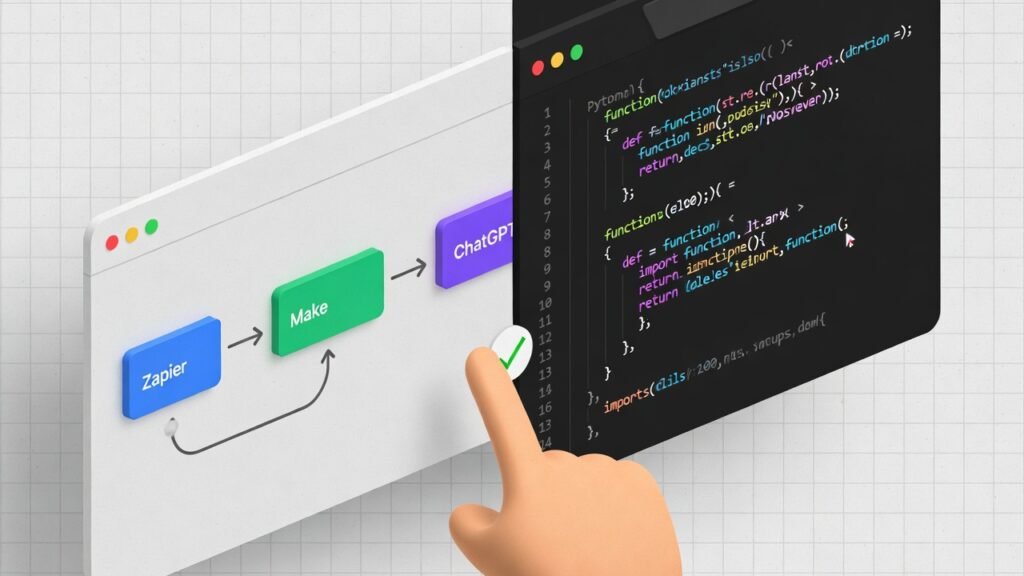
Your primary toolkit will be no-code/low-code platforms. Proficiency in these is far more critical than knowing Python for this business model.
- Automation Hubs: Zapier, Make, n8n.
- AI & Chatbot Builders: Custom GPTs, Chatbase, Voiceflow, Landbot.
- Visual Builders: Bubble, Softr, Glide for building simple web apps.
Should You Learn to Code?
It’s a superpower, not a requirement. Knowing basics (like Python or JavaScript) can help with custom solutions and debugging, allowing you to tackle more complex, higher-paying projects. But you can launch, get clients, and generate serious income purely with no-code skills. Start without code, and learn as you scale.

Popular AI Automation Services You Can Offer in 2026
Your service menu should solve specific, painful problems. Here are high-demand services for 2026:
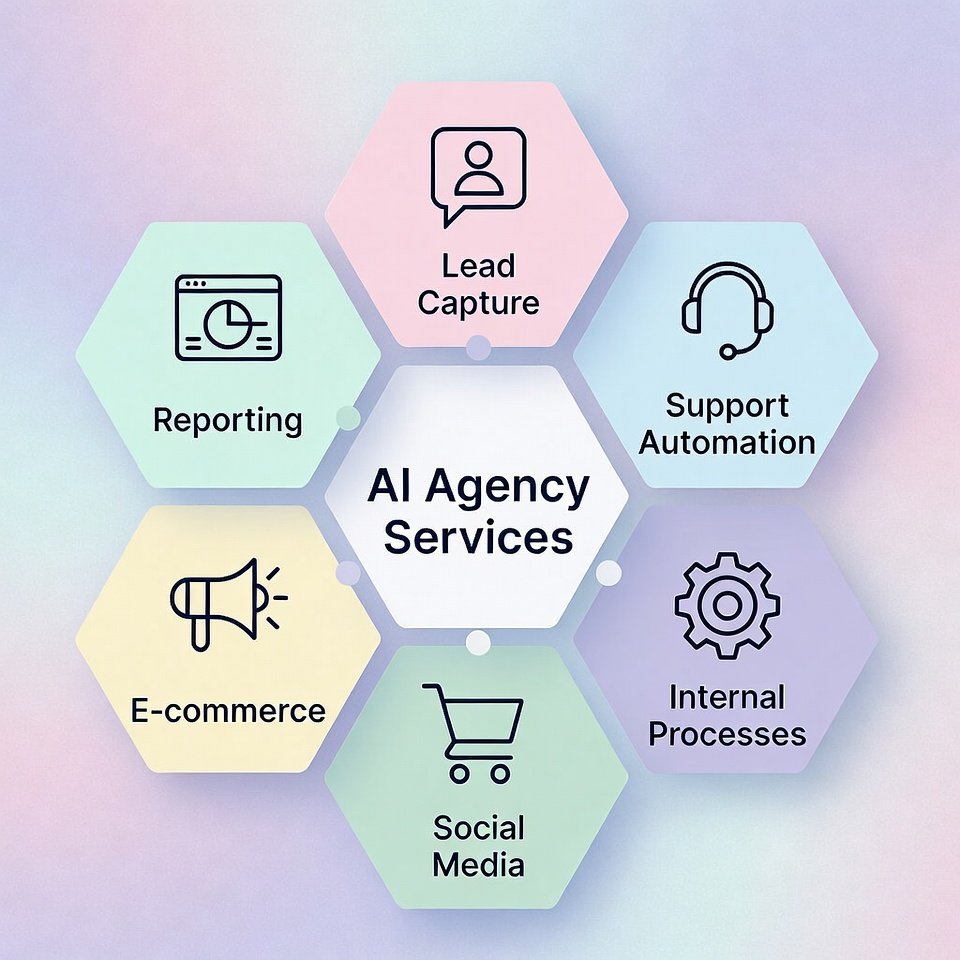
1. Intelligent Lead Capture & Nurturing
- Build website chatbots that qualify leads 24/7.
- Automate SMS/email follow-up sequences based on user behavior.
- Create systems that book meetings directly into a calendar.
2. Customer Support Automation
- Set up AI-powered help desks that answer common FAQs from a knowledge base.
- Automate ticket triaging and routing to the right human agent.
3. Internal Process Automation
- Automate data entry from emails or forms into CRMs like HubSpot or Salesforce.
- Create automated reporting dashboards that pull data from multiple sources.
- Build employee onboarding sequences in Slack or Microsoft Teams.
4. Content & Social Media Automation
- Develop systems that repurpose long-form content (like a webinar) into social posts, emails, and blog snippets.
- Automate social media listening and engagement alerts.
5. E-Commerce & Operations
- Automate post-purchase follow-up sequences and review requests.
- Build inventory alert systems and reordering workflows.
Your Step-by-Step Blueprint: How to Start an AI Automation Agency From Scratch
Follow these seven steps to go from zero to your first client.
Step 1: Niche Down (Your First Strategic Decision)
Don’t be a generalist. Specialize. Serving “small businesses” is too vague. Choose a vertical like:
- Real estate agents
- Dental/medical practices
- E-commerce (Shopify stores)
- Local service businesses (plumbers, roofers, HVAC)
Specializing lets you understand their unique pains, build repeatable solutions, and become the go-expert.
Step 2: Build Your Foundational Knowledge & Toolkit
- Skills: Take a practical course on Zapier/Make and a core AI tool
- Stack: Choose your core software. Start simple: Zapier/Make, a chatbot builder, and Google Workspace.
- Sandbox: Create free accounts and build dummy projects. Automate something in your own life first.
Step 3: Craft Your Offer & Business Model
Decide how you’ll sell. The two most effective models for beginners are:
- Project-Based: A fixed fee for a specific automation (e.g., “$3,500 to build and install a lead-qualifying chatbot”).
- Retainer Model: A monthly fee for ongoing management, monitoring, and tweaks of automations (e.g., “$500/month”).
Step 4: Build a Simple, Credible Presence
- Website: A one-page site on Carrd or a simple WordPress site is enough. Focus on clear copy: who you help, what problem you solve, and a case study (even if it’s from your sandbox project).
- LinkedIn Profile: Optimize it. You are now an “AI Automation Strategist for [Your Niche].”
Step 5: Create Content That Attracts
Demonstrate your expertise. Post short LinkedIn videos explaining a simple automation. Write a case study on your website breaking down a process you automated. Use the problem-solution-result format.
Step 6: The First Client Hunt (The Outreach Formula)
This is active work. Target 5 businesses in your niche daily.
- Find them: Google Maps, Instagram, niche directories.
- Message them: Use a personalized, value-first template.
“Hi [Name], I was looking at [Their Business] and noticed you offer [Service]. I specialize in helping [Niche] save time on admin by automating things like lead follow-up. I built a simple system that could potentially capture missed inquiries after hours. Would you be open to a 15-minute chat to see if it’s a fit?”
Step 7: Deliver an Unforgettable First Project
Over-deliver. Document everything. Get a testimonial and a case study. This is the fuel for your next 10 clients.
Tools & Software Needed for Your AI Agency (2026 Stack)
You don’t need everything. Build your arsenal gradually.
- Core Automation: Zapier (easiest) or Make (more powerful/complex).
- AI & Chatbots: OpenAI’s platform for custom assistants, Chatbase for knowledge-based bots, Voiceflow for voice/advanced chat.
- No-Code Development: Bubble (web apps), Softr (client portals), Airtable (databases).
- Communication & Business: Google Workspace (email, docs), Calendly (scheduling), Loom (video explanations).
- Project Management: Trello or ClickUp for tracking client work.
- Payments & Proposals: Stripe for payments, PandaDoc for proposals/contracts.
- 🎤 [Intuitive Status] – Achieve seamless recording with our VELOMAX 3-in-1 mic wireless. This plug & play wireless microp…
- 🎙️ [Pro-Grade Audio Modes] – Adapt to any recording scene effortlessly with 3 smart modes: Noise Reduction🧊 (for crowded…
- 🔋 [Ultra-Long Power] – Record for hours without worry! The VELOMAX wireless mic for YouTube offers up to 14 hours (solo)…
Pricing Models & How to Actually Make Money
Pricing is where most beginners falter. Do not charge by the hour. Charge for value.
1. Project-Based Pricing: Ideal for one-off automations.
- Scope carefully: Define exact inputs, processes, and outputs.
- Example Price: $2,500 – $8,000+ per project, depending on complexity.
2. Monthly Retainer (The Gold Standard): Creates recurring revenue.
- Example Structure: $1,000 – $3,000/month. This includes a set number of automation “credits,” monitoring, maintenance, and priority support.
- Sell Peace of Mind: You’re not selling a tool; you’re selling a guaranteed result and the freedom from technical headaches.
3. Hybrid Model: A project fee to build + a lower monthly fee to maintain and optimize.
How to Justify Your Price: Always tie it to the client’s ROI. “This $3,000 automation will save your office manager 15 hours a month. That’s $900 in saved wages every month. It pays for itself in just over three months, and then it’s pure profit for you.”
How to Get Your First Clients (USA Market Focus)
Beyond the outreach in Step 6, leverage these channels:
- LinkedIn: It’s the #1 B2B platform. Engage with business owners in your niche. Comment thoughtfully on their posts. Share your mini-case studies.
- Local Business Networks: Attend Chamber of Commerce events (even online). Offer a free “AI Efficiency Audit.”
- Partner with Complementary Service Providers: Find marketing agencies, web developers, or bookkeepers who serve your niche. Offer them a referral fee (20-30% of the first project). They have the trust; you have the solution.
- Freelance Platforms (Strategic Use): Use Upwork or Fiverr not for cheap jobs, but to find clients willing to pay for quality. Craft proposals that focus on business outcomes.
Common Mistakes Beginners Make (And How to Avoid Them)
Mistake 1: Overpromising and Under-Scoping.
Fix: Have a rigorous discovery process. Use a questionnaire and a call to map the entire process before quoting.
Mistake 2: Chasing Shiny Objects.
Fix: Master 2-3 core tools deeply before adding new ones. Depth beats breadth.
Mistake 3: Ignoring Your Own Business Automation.
Fix: Use your own skills! Automate your lead follow-up, proposal sending, and invoicing.
Mistake 4: Undercharging Out of Fear.
Fix: Remember the value you provide. A $5,000 project that saves a client $30,000 a year is a bargain. Price confidently.
Scaling Your AI Automation Agency to $10k+/Month
Once you have 3-5 happy clients, focus on systems.
1. Productize Your Services. Create 2-3 standardized “packages” (e.g., “Lead Machine,” “Support Savior”). This makes selling easier.
2. Build a Team. Outsource lower-skill tasks first (research, basic setup). Hire a specialist VA or a junior automator to handle execution while you focus on sales and complex architecture.
3. Raise Your Prices. With proven results and testimonials, increase your project and retainer fees. Target larger clients.
4. Focus on Retention. A happy retainer client is worth 5x a project client. Nurture them. Check in quarterly. Offer new ideas.
5. Develop an Authority Platform. Start a niche podcast, write detailed guides, or run small webinars. This builds inbound lead flow.
The Future of AI Automation Agencies (Beyond 2026)
This isn’t a fleeting trend. As noted by McKinsey & Company, automation and AI adoption are fundamental shifts in the business landscape. The agency model will evolve:
- Hyper-Specialization: Agencies will focus on micro-niches or specific business functions.
- AI-as-a-Collaborator: You’ll work with advanced AI to design and even debug automations faster.
- Strategic Partnership: You’ll move from a service provider to a core “efficiency partner,” involved in business strategy.
- Vertical-Specific Solutions: Pre-built, templated automation “suites” for specific industries will become common.
Final Thoughts: Your Journey From Idea to Sustainable Income
Starting an AI Automation Agency in 2026 is one of the most accessible, high-potential business paths available today. It aligns perfectly with market demand, technological capability, and the global shift towards efficient, intelligent operations.
The gap between idea and income is bridged by action—not by more research. Your first step isn’t a business license or a fancy logo. It’s choosing your niche and building one automation for yourself. Then, find one person who has the problem you just solved, and talk to them.
The tools are here. The market is ready. The question is, are you?
Recommended Tool: Reliable Hosting for Your Agency Website
https://hostinger.in?REFERRALCODE=CM8MK7508CRS
1. Do I need to know how to code to start an AI Automation Agency?
No, coding is not a requirement. You can run a successful agency using no-code platforms like Zapier, Make, and Bubble. However, knowing basic coding (like HTML, CSS, JavaScript) can help you create more custom solutions and expand your service offerings for higher-value projects.
2. How much does it cost to start an AI Automation Agency?
You can begin with an initial investment of $500-$1,000. This covers essential tool subscriptions, website hosting, and basic marketing. The most significant investment is your time and commitment to learning. It’s one of the most accessible tech businesses to launch.
3. How do I get my first client?
Your first 3-5 clients will likely come from active outreach. Send targeted messages to business owners on LinkedIn, join local business networks (online or in-person), or partner with marketing agencies or web developers who serve your niche. A strong case study—even from a practice project you built for yourself—is crucial for building trust.
4. What’s the most important skill for running an AI Automation Agency?
It’s not coding; it’s systems thinking. This means being able to deconstruct a business process into clear steps and design “if this, then that” logic flows. The second most critical skills are client communication and project management—translating technical solutions into clear business benefits.
5. How should I price my AI automation services?
Avoid hourly pricing. Use value-based pricing. Show the client how your solution will save them hours and dollars each month. A simple automation project can range from $2,500 to $8,000. A monthly retainer for management and support typically ranges from $500 to $3,000/month.
6. Can I start this business part-time?
Absolutely. Many successful agency owners began this as a part-time side project. Dedicating 10-15 focused hours per week is enough to onboard your first client and build momentum. You can transition to full-time as your client roster and revenue grow.
Disclaimer
The information contained in this blog post is for educational and informational purposes only. It is not intended as financial, business, or legal advice. You should consult with a professional advisor before making any decisions based on this content. Starting a business involves risk, including financial loss. Any mentioned income figures or success stories are illustrative examples and are not guarantees of your personal results. Your success in starting an AI Automation Agency depends on your individual skills, effort, market conditions, and other factors. The author and publisher assume no responsibility for your actions or outcomes.
RELATED POSTS
View all


The Ultimate Guide to AI Tools for Faceless Videos (Free & Paid)
December 31, 2025 | by mk75089317@gmail.com
AI Automation Tools for Small Businesses (India & USA): Real Use Cases, Costs & Step-by-Step Setup (2026)
January 19, 2026 | by mk75089317@gmail.com
Top AI SaaS Tools for Content Creators in 2026: Automate, Optimize & Grow
December 25, 2025 | by mk75089317@gmail.com