

AI automation eCommerce 2026 is no longer optional—it’s essential for survival. If you’re an eCommerce store owner, you’re facing…
January 8, 2026 | by mk75089317@gmail.com

Introduction
AI automation eCommerce 2026 is no longer optional—it’s your business survival toolkit. If you’re an eCommerce store owner, you’re facing a stark reality: manual work is becoming a luxury you can’t afford. The endless hours spent on product research, customer service, and marketing aren’t just inefficient; they’re threats to your growth that AI automation eCommerce 2026 solutions can eliminate.. The global eCommerce landscape is moving at a pace that human effort alone cannot match.
But there’s a seismic shift happening. AI automation for eCommerce has evolved from a buzzword into the central operating system for successful online stores. This isn’t about simple chatbots anymore. In 2026, sophisticated AI is completely replacing manual eCommerce work, handling complex tasks from dynamic pricing to hyper-personalized marketing and even pre-empting supply chain disruptions.
This blog post is your definitive guide to understanding and harnessing this revolution. Whether you’re a Shopify merchant, a WooCommerce store owner, or a small business owner navigating markets in the USA or India, we’ll show you exactly how AI automation in 2026 works, the tools you need, and the actionable steps to implement it today. Let’s future-proof your business.
Table of Contents
1. What is AI Automation in eCommerce?
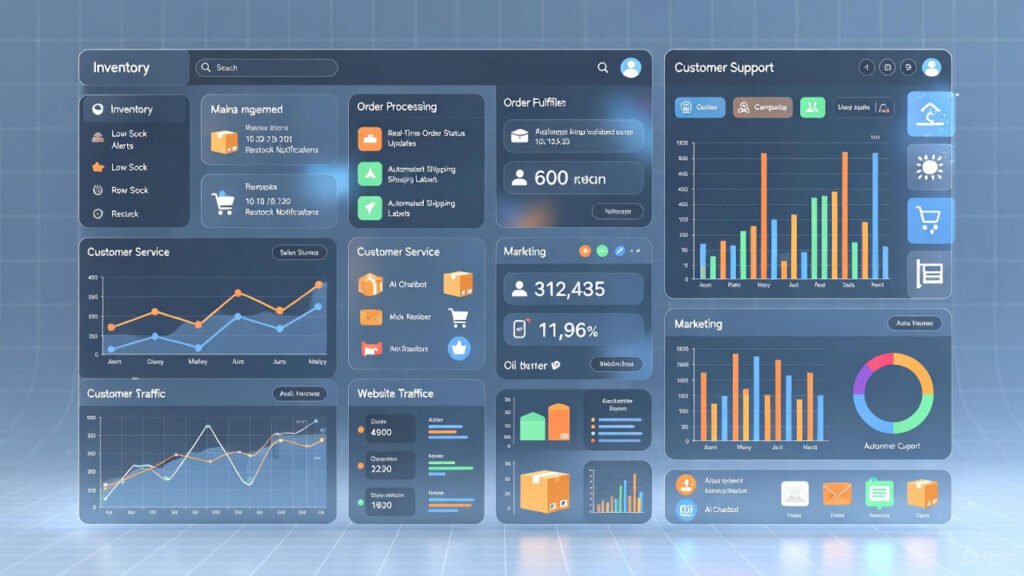
In simple terms, AI automation for eCommerce is the use of intelligent software to perform tasks that traditionally required human thinking, judgment, and manual effort. It’s the difference between you scouring the web for trending products and an AI tool for online stores analyzing billions of data points to predict the next best-seller.
In 2026, this goes far beyond pre-set rules (“if out-of-stock, email me”). Modern AI systems:
- Learn from your store’s data, customer behavior, and market trends.
- Predict outcomes like demand surges or customer churn.
- Decide on optimal actions, like adjusting ad spend or reordering inventory.
- Execute tasks autonomously, 24/7, across your entire business ecosystem.
This creates a self-optimizing, highly efficient store that scales with minimal direct human intervention.
2. Why Manual eCommerce Work is Failing in 2026
The old ways are breaking down. Here’s why sticking to manual processes is a losing strategy:
- Speed & Scale: Human teams can’t process data or react to market changes at the speed required in 2026’s hyper-competitive environment.
- The Data Deluge: Customer, market, and logistical data are too vast for humans to analyze effectively for actionable insights.
- Rising Customer Expectations: Shoppers now expect instant, 24/7 support, hyper-personalized experiences, and perfect logistics—all impossible to deliver manually at scale.
- Profit Margin Compression: With increased competition, manual inefficiencies (overstocking, pricing errors, ad waste) directly erase your profits.
- The Talent Gap: It’s increasingly difficult and expensive to hire and retain talent for repetitive, manual eCommerce roles.
Bottom Line: In 2026, AI replacing manual eCommerce work isn’t about cutting jobs; it’s about empowering your business to do what humans do best—strategy, creativity, and relationship-building—by offloading the repetitive, data-heavy tasks.
3. Areas Where AI Is Replacing Manual Work
Let’s break down the specific fronts where AI automation 2026 is taking over.
Product Research & Sourcing
Gone are the days of guessing games. AI tools now:
- Analyze social sentiment, search trends, and competitor sales to predict viral products.
- Automatically source optimal suppliers by comparing prices, ratings, and delivery times.
- For Dropshippers: AI can dynamically select suppliers based on real-time stock and location of the customer, ensuring the fastest delivery.
Inventory & Supply Chain Management
This is where AI shines brightest. Systems provide:
- Predictive Demand Forecasting: Using AI to analyze seasonality, trends, and promotions to predict exactly how much stock you need, reducing both overstock and stockouts.
- Automated Replenishment: AI automatically places purchase orders with suppliers when inventory hits the predicted threshold.
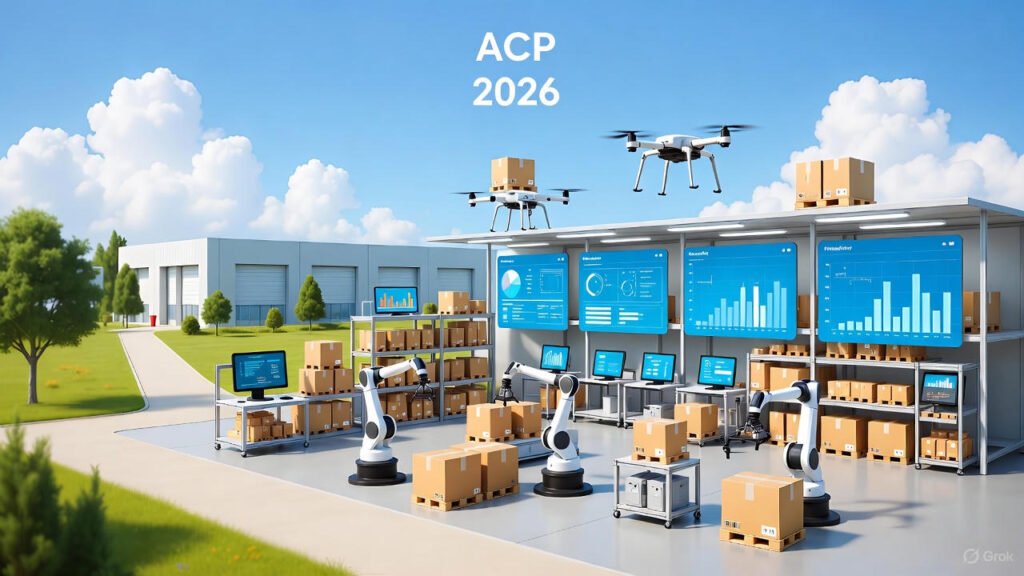
- Smart Warehouse Management: In larger operations, AI directs robots and systems for optimal picking and packing.
Order Fulfillment & Logistics
AI optimizes the entire post-purchase journey:
- Carrier Selection: AI automatically chooses the cheapest/fastest shipping carrier for each order based on destination and package size.
- Dynamic Routing: For businesses with multiple fulfillment centers, AI determines the closest location to the customer to ship from.
- Delivery Prediction & Communication: AI provides accurate, dynamic delivery estimates and proactively sends updates to customers.
Customer Support (The AI-Powered Helpline)
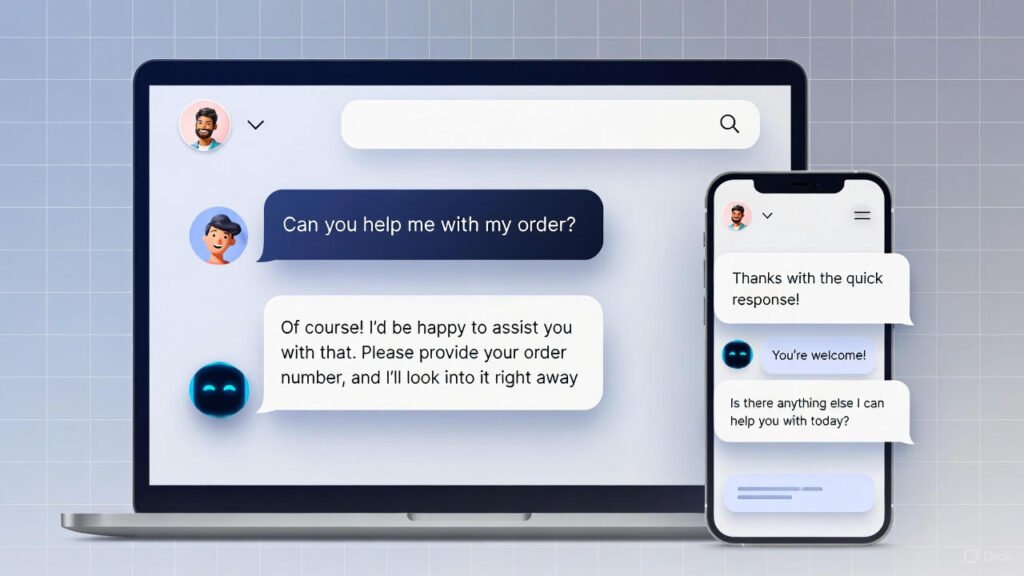
Modern AI chatbots are conversational geniuses:
- They resolve up to 80% of routine queries (tracking, returns, FAQs) instantly.
- They seamlessly escalate complex issues to human agents, providing full context.
- They analyze customer sentiment in real-time, alerting you to potential problems before they escalate.
Marketing & Ads Automation
Say goodbye to guesswork in marketing. AI now:
- Creatives & Copy: Generates and A/B tests hundreds of ad creatives, product descriptions, and email subject lines.
- Audience Targeting: Dynamically finds and targets high-intent lookalike audiences across platforms.
- Budget Allocation: Automatically shifts ad spend in real-time to the best-performing channels and campaigns. This level of marketing automation is now table stakes.
Dynamic Pricing Optimization
AI ensures you’re never leaving money on the table or pricing yourself out of the market:
- Continuously monitors competitor prices, demand, inventory levels, and market conditions.
- Automatically adjusts prices to maximize profit or sales volume based on your goal.
- This is crucial for marketplaces like Amazon or for competitive niches.
Fraud Detection & Security
AI protects your revenue by:
- Analyzing thousands of transaction features (IP, behavior, device info) in milliseconds to flag fraudulent orders.
- Continuously learning from new fraud patterns, becoming more effective over time.
- Reducing false positives, so you don’t turn away legitimate customers.
4. Best AI Tools for eCommerce Automation (2026)
Here’s a curated list of top-tier tools categorized by function:
- All-in-One Operations: Linnworks AI (orchestrates inventory, orders, and fulfillment), ZikZuk (prominent in India for multi-channel automation).
- Product & Supplier Research: EcomSage, AutoDS (particularly strong for dropshippers).
- Customer Service & Marketing: Zendesk AI, Klaviyo AI (for hyper-personalized email/SMS flows), Octane AI (for Shopify quizzes and segmentation).
- Pricing Intelligence: RepricerExpress, Competera.
- Content & Creatives: Jasper (for copy), AdCreative.ai (for generating ad images).
- Fraud Prevention: Signifyd, NoFraud.
Featured Snippet Tip: The best AI tools for online stores in 2026 specialize in specific functions like dynamic pricing, customer service, or inventory forecasting. For most store owners, starting with an integrated AI solution for their core platform (like Shopify automation using AI apps) is the most practical first step.
5. Shopify & WooCommerce AI Automation Examples
Shopify Automation Using AI
The Shopify App Store is flooded with AI power-ups:
- Product Description Generators: Apps like AI Description Generator create SEO-rich copy in seconds.
- Merchandising Bots: Tools like Nosto use AI to personalize the on-site experience (e.g., “Customers like you also bought…”).
- Smart Search & Filters: Apps like Klevu use natural language processing to understand search intent.
- Backend Operations: Beeketing or Birdsend automate post-purchase sequences and cart recovery with AI-driven timing.
WooCommerce AI Automation
As an open-source platform, WooCommerce integrates with powerful AI backends:
- Plugins for Pricing: Plugins connect with Pricemole or other APIs for dynamic pricing.
- AI-Powered Recommendations: Use a plugin like WooCommerce Recommendations to embed machine-learning-driven upsells.
- Custom Integration: The open nature allows developers to build custom integrations with AI services from AWS, Google Cloud, or Azure for truly bespoke WooCommerce AI automation.
6. The Tangible Benefits of AI Automation for Store Owners
- Dramatically Reduced Operational Costs: Slash hours spent on manual tasks.
- Increased Revenue: Through optimized pricing, reduced cart abandonment, and hyper-targeted marketing.
- Scalability: Handle 10x the orders without a 10x increase in staff.
- Data-Driven Decisions: Replace gut feelings with predictive insights.
- Enhanced Customer Experience: 24/7 support, personalized shopping, and reliable fulfillment.
- Competitive Edge: Operate with an efficiency that manual competitors cannot match.
7. AI Automation for Small Businesses (India & USA Use Cases)
For USA Small Businesses:
- Use Case: A niche fitness apparel store uses AI to forecast demand for specific sizes/colors, automatically creates targeted Facebook ads for “yoga enthusiasts in California,” and uses a chatbot to handle pre-sale sizing questions, all with a 1-person team.
- Tools: Shopify’s native AI features + Klaviyo + a customer service AI like Gorgias.
For India Small Businesses (D2C/SMBs):
- Use Case: A traditional spice seller scaling online uses an AI tool to manage inventory across Shopify and Amazon India, automatically generates product descriptions in multiple Indian languages, and uses WhatsApp-integrated AI chatbots to process orders and answer queries, overcoming language and accessibility barriers.
- Tools: Platforms like ZikZuk for multi-channel management, Haptik for WhatsApp AI.
8. Challenges & Limitations of AI Automation
It’s not a magic bullet. Be aware of:
- Initial Cost & Setup: Quality AI tools require investment. ROI must be calculated.
- Data Dependency: AI needs clean, historical data to learn. New stores may face a “cold start” problem.
- Over-Automation: Losing the human touch, especially in branding and complex customer service scenarios, can backfire.
- Constant Evolution: The field changes fast. You need to stay updated on new tools and best practices.
9. Future of eCommerce Automation After 2026
We’re moving towards:
- Autonomous Store Entities: AI that doesn’t just assist but fully manages entire storefronts, making strategic business decisions.
- Hyper-Personalized Product Creation: AI designing and prototyping products based on micro-niche demand signals.
- Seamless Omnichannel Orchestration: AI managing unified inventory and customer journeys across physical pop-ups, online stores, and social commerce platforms effortlessly.
- Voice & Visual Commerce AI: Advanced AI that can manage stores operated primarily through voice commands or image searches.
10. Actionable Steps to Start AI Automation Today
- Prioritize: Start with the task with the highest volume and lowest complexity (e.g., FAQ responses with a chatbot).
- Audit: List your top 3 most time-consuming, repetitive manual tasks.
- Research Tools: Use the categories in Section 4 to find a tool for your prioritized task. Start with free trials.
- Integrate & Test: Implement one tool at a time. Run it in parallel with your manual process to test efficacy.
- Measure & Scale: Define a clear KPI (e.g., “reduce time spent on X by 50%”). Once proven, scale and add the next automation.
https://www.mckinsey.com/featured-insights/artificial-intelligence
- AI tools for eCommerce
<a href="/blog/ai-tools-for-ecommerce">AI tools for eCommerce</a>- AI chatbots for eCommerce
<a href="/blog/ai-chatbots-for-ecommerce">AI chatbots for eCommerce</a>- Shopify automation using AI
<a href="/blog/shopify-automation-using-ai">Shopify automation using AI</a>- WooCommerce AI automation
<a href="/blog/woocommerce-ai-automation">WooCommerce AI automation</a>- AI marketing automation for eCommerce
<a href="/blog/ai-marketing-automation-for-ecommerce">AI marketing automation for eCommerce</a>- Automate dropshipping using AI
<a href="/blog/how-to-automate-dropshipping-using-ai">Automate dropshipping using AI</a>- Best AI tools for Shopify in 2026
<a href="/blog/best-ai-tools-for-shopify-2026">Best AI tools for Shopify in 2026</a>
Is AI automation too expensive for a brand-new eCommerce store?
Start small. Many tools offer freemium plans or are bundled in platforms like Shopify. Begin with a single, high-impact use case like AI-generated product descriptions or a basic chatbot. The ROI in saved time is often immediate.
Will AI automation take away jobs from my small team?
In 2026, AI is less about job replacement and more about job transformation. It frees your team from tedious tasks, allowing them to focus on creative work, strategy, and high-touch customer relationships—activities that drive real growth.
What’s the #1 area I should automate first for the fastest ROI?
For most stores, customer service via an AI chatbot provides the fastest, most visible ROI. It reduces ticket volume instantly, improves customer satisfaction with 24/7 responses, and frees up significant human resources.
How reliable is AI in handling sensitive tasks like inventory ordering?
Modern AI is highly reliable but works best as a co-pilot. Start by letting it make recommendations you approve. As its accuracy proves itself (typically within 1-2 business cycles), you can move to full automation with safety stock parameters in place.
Are there specific AI tools better suited for the Indian eCommerce market?
Yes. Look for tools that excel at multi-lingual support (especially for Indian languages), integrate with popular local platforms like Flipkart or Meesho, and handle logistics for India’s complex geographic landscape. ZikZuk and Locus are good examples.
Can I automate my entire Shopify store with AI?
In 2026, you can get remarkably close. From product import and pricing to marketing, sales, and support, a suite of integrated Shopify automation using AI apps can handle 80-90% of operational tasks. The human role becomes one of oversight, brand strategy, and exception handle.
Take the first step towards automating your store today—small actions lead to big results.
Best Web Hosting for Running AI Tools on eCommerce Stores
https://hostinger.in?REFERRALCODE=CM8MK7508CRS

- Processor: AMD Ryzen 5 7235HS | Speed: 3.2GHz (Base) – 4.2GHz (Max) | 4 Cores | 8 Threads | 8MB Cache
- Display: 15.6″ FHD (1920×1080) IPS Technology | 144 Hz Refresh Rate | 100pct. sRGB |Brightness: 300Nits Anti-glare || Co…
- Memory: 12GB RAM DDR5-4800, Max memory Up to 32GB DDR5-4800 | Storage: 512GB SSD, Up to two drives, Max storage support …

- 【4-core AMD Ryzen 5 7520U】Unleash superior performance with a processor optimized for efficiency. Its 8 threads, and 4MB…
- 【High-capacity memory and storage】Work with ease on the 16GB DDR5 RAM. The 512GB PCIe NVMe M.2 SSD provides generous sto…
- 【Micro-edge display】Experience vivid details on the 15.6-inch, FHD anti-glare display. Revel in the stunning clarity and…
12. Conclusion
The transition from manual to automated eCommerce is no longer a future possibility—it’s the defining competitive reality of 2026. AI replacing manual eCommerce work is the single most powerful lever you can pull to scale your business, improve profitability, and reclaim your time.
The journey begins with a single, deliberate step. You don’t need to automate everything tomorrow.
Your Next Move: Choose one manual task from your audit list—right now. It could be writing product descriptions, answering “where’s my order?” questions, or adjusting Facebook ad bids. Spend the next 30 minutes researching one AI tool for online stores that solves that specific problem. Sign up for a trail.
The future of eCommerce is automated. Make sure your store is part of it.
Free Guide: AI Automation for eCommerce in 2026
RELATED POSTS
View all


How AI Agents Will Replace Manual Work in 2026: A Complete Guide to the Future of Automation
January 2, 2026 | by mk75089317@gmail.com
Struggling with AI Output? Learn Prompt Engineering for Consistent Results
January 11, 2026 | by mk75089317@gmail.com
AI Automation Ideas to Build Passive Income in 2026: Your Ultimate Guide
January 5, 2026 | by mk75089317@gmail.com