

Discover what edge computing is, how it works, real-world examples, and why it’s crucial for the future of tech. Learn the benefits, challenges, and how it compares to cloud.
December 26, 2025 | by mk75089317@gmail.com

Get Hosting at 20% discount
https://hostinger.in?REFERRALCODE=CM8MK7508CRS
What is Edge Computing? How It Works, Real Examples, and Why It’s the Future of Technology
Imagine a self-driving car encountering a sudden obstacle. It can’t afford to send data hundreds of miles to a distant cloud server, wait for processing, and receive instructions. A split-second delay could be catastrophic. This critical need for speed and real-time response is why edge computing is rapidly moving from a niche concept to the backbone of modern technology. As our world becomes saturated with Internet of Things (IoT) devices, smart cities, and immersive experiences, the traditional “cloud-only” model is hitting its limits. This article demystifies edge technology, explaining how it works, where it’s used, and why it’s not just an evolution but a revolution in how we process data.
What is Edge Computing? (Simple Explanation)
In simple terms, edge computing is a distributed computing framework that brings enterprise applications closer to data sources such as IoT devices or local edge servers. This proximity to data at its source can deliver strong business benefits, including faster insights, improved response times, and better bandwidth availability.
Think of it this way: The traditional cloud is like a centralized supermarket. You drive across town to get groceries (data processed). Edge computing is like having a neighborhood convenience store—or even a pantry in your own home. For small, immediate needs, you don’t make the long trip; you get what you need right away.
The “edge” refers to the literal geographic distribution of computing. It’s the edge of the network, located near the devices collecting data. Instead of sending every byte of data from a factory sensor, a security camera, or a patient’s heart monitor to a massive, centralized data center, edge computing processes that data locally. Only the most important, processed information is sent to the cloud for long-term storage or deeper analysis, saving time, bandwidth, and cost.
https://www.ibm.com/cloud/what-is-edge-computing
How Does Edge Computing Work?
The workflow of edge computing can be broken down into a streamlined, step-by-step process that highlights its efficiency.
[Insert infographic: edge computing workflow]
Here’s a simplified technical workflow:
- Data Generation: An endpoint device (e.g., a robotic arm, a smart thermostat, a video camera) generates raw data.
- Local Processing & Analysis: Instead of traveling over the internet, this data is immediately sent to a local edge computing device. This could be an edge gateway, a micro data center, or even a powerful processor within the device itself (like in a modern smartphone).
- Instant Decision-Making: The edge device runs algorithms or AI models to analyze the data in milliseconds. It can then make an immediate decision or trigger an action.
- Action at the Source: The robotic arm corrects its movement, the thermostat adjusts the temperature, or the camera sends a real-time alert for detected motion.
- Selective Cloud Sync: Only relevant, summarized data (e.g., “anomaly detected at 2:05 PM,” “maintenance required on Unit B,” or a daily report) is sent to the central cloud for storage, historical analysis, or model retraining.
This architecture creates a powerful, responsive network where time-sensitive processing happens locally, and the cloud serves as a robust backend for less urgent tasks.
Edge Computing vs Cloud Computing
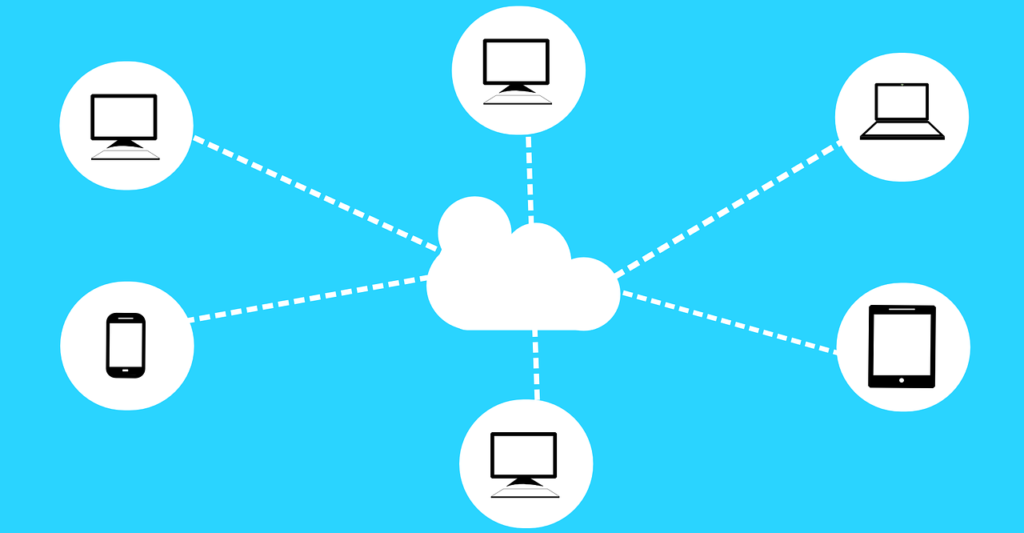
While often presented as rivals, edge and cloud computing are complementary forces in a hybrid IT ecosystem. Understanding their differences is key to leveraging their strengths.
[Insert diagram of cloud vs edge architecture]
| Feature | Cloud Computing | Edge Computing |
|---|---|---|
| Primary Goal | Centralized storage, heavy data processing, scalability | Localized processing, real-time action, reducing latency |
| Data Processing Location | Centralized, remote data centers | Distributed, at or near the source of data generation |
| Latency | Higher (100s of ms to seconds), due to distance | Extremely low (sub-10 ms), enabling real-time response |
| Bandwidth Use | High, as all raw data is transmitted | Drastically reduced, as only critical data is sent |
| Real-World Use | Enterprise software, email, video streaming, big data analytics | Autonomous vehicles, industrial automation, remote surgery |
| Cost Model | OpEx (subscription fees, pay-as-you-go) | Higher initial CapEx (hardware), but lower ongoing bandwidth costs |
| Security Focus | Centralized fortresses; breaches can be catastrophic | Distributed attack surface; data can be anonymized locally |
The future isn’t about choosing edge vs cloud, but strategically deploying each where it excels.
Real-Life Use Cases & Examples
The theoretical power of edge computing comes to life in these concrete edge computing examples:
- Healthcare Remote Monitoring: For patients with chronic conditions, wearable devices can monitor vital signs locally. The edge device analyzes heart rhythms in real-time. It only alerts a central system or doctor if a dangerous anomaly is detected, ensuring immediate intervention while protecting patient privacy and avoiding data floods.
- Self-Driving Cars: An autonomous vehicle generates terabytes of data daily from LiDAR, cameras, and radar. Processing this data in the cloud is impossible due to latency. Edge computing in the car’s onboard computers allows it to make instant decisions—braking for a pedestrian or navigating a complex intersection—without any network lag.
- Smart Cities: Traffic management systems use edge computing to analyze video feeds from intersections locally. They can optimize traffic light sequences in real-time to reduce congestion, instead of sending all video to a city data center. Similarly, smart grids balance energy loads locally for greater resilience.
- Security Surveillance: A smart security camera with edge AI can process video locally to distinguish between a person, a vehicle, and a stray animal. It only sends alerts for relevant events, saving massive cloud storage costs and enabling immediate security responses.
- Gaming & 5G IoT: Cloud gaming services (like Xbox Cloud Gaming) use edge servers in local regions to reduce lag, making gameplay feel responsive. In manufacturing, 5G-enabled edge networks allow thousands of IoT sensors on an assembly line to coordinate in real-time, predicting failures before they happen.

https://www.redhat.com/en/topics/edge-computing/what-is-edge-computing
Benefits of Edge Computing
The shift toward edge technology is driven by compelling, tangible edge computing benefits:
- Lower Latency: This is the flagship advantage. By processing data close to its source, edge computing eliminates the round-trip delay to the cloud, enabling true real-time applications.
- Faster Processing & Improved Performance: Applications become more responsive and reliable, as they are no longer wholly dependent on the quality and speed of a network connection.
- Reduced Cloud Load & Bandwidth Costs: Transmitting only vital data to the cloud dramatically reduces bandwidth consumption, leading to significant cost savings, especially for data-intensive operations like video.
- Enhanced Privacy & Data Sovereignty: Sensitive data (e.g., from a factory floor or a medical device) can be processed and even anonymized locally. Only non-sensitive insights are forwarded, helping comply with regulations like GDPR.
- Greater Reliability & Offline Operation: Edge devices can continue to operate and make critical decisions even if the connection to the central cloud is interrupted, ensuring business continuity in remote or unstable environments.
The Future of Edge Computing
The future of edge computing is inextricably linked with other transformative technologies, creating a powerful synergy.
- AI at the Edge: Deploying lightweight AI models directly on edge devices is a game-changer. This allows for real-time inference—like a camera identifying defects on a production line—without cloud dependency.
- Explosion of IoT & 5G: The proliferation of IoT devices generates unprecedented data volumes. 5G networks, with their high speed and low latency, are the perfect conduit to connect these devices to edge nodes, enabling smart factories, connected logistics, and advanced AR/VR.
- Market Growth Potential: According to analysts, the edge computing market is poised for explosive growth, projected to multiply in value over the next five years as industries from retail to energy invest in digital transformation.
- Industry 4.0 & Robotics: In manufacturing, edge computing powers the real-time coordination of robots, predictive maintenance, and digital twins, making “lights-out” factories a reality.
Challenges & Limitations
Adopting edge computing is not without its hurdles. Honest assessment is crucial:
- Security Risks: While it can enhance privacy, a distributed edge architecture expands the “attack surface.” Securing thousands of remote devices is more complex than defending a centralized data center.
- Initial Infrastructure & Complexity: Deploying and managing a globally distributed network of edge hardware requires significant upfront investment (CapEx) and introduces operational complexity.
- Skill Gap: Implementing and maintaining edge systems requires a blend of IT, networking, and domain-specific expertise that is currently in short supply.
Should Your Business Adopt Edge Computing?
Not every business needs edge computing today. Here’s a simple decision guide:
Adopt Edge Computing if your business:
- Requires real-time or near-instant data processing and response.
- Operates a large number of IoT devices in remote or bandwidth-constrained locations.
- Handles sensitive data that must be processed locally for privacy or compliance.
- Suffers from high cloud data transfer costs or latency issues impacting operations.
Stick with Cloud-Centric Models if your business:
- Primarily uses standard enterprise applications (CRM, ERP, email).
- Performs batch processing or analytics where latency is not a concern.
- Lacks the technical resources to manage distributed infrastructure.
- Has workloads that benefit more from the cloud’s infinite, elastic scalability.
For many, a hybrid approach—using edge for real-time, local processing and the cloud for storage, analytics, and management—will be the optimal path.
Conclusion
Edge computing is far more than a buzzword; it’s a fundamental shift in our technological architecture. By moving processing power to the logical edge of the network—closer to where data is born and actions are needed—we unlock possibilities that pure cloud computing cannot support. From life-saving medical devices to efficient smart cities and autonomous systems, edge technology is the silent engine powering the next wave of innovation. As AI, IoT, and 5G converge, its role will only become more central. The question for businesses is no longer if but when and how they will integrate edge computing into their digital strategy to stay competitive, efficient, and responsive in a data-driven world.
Ready to explore how edge computing could transform your operations? Download our free PDF guide “Evaluating Edge Solutions for Your Business” or share your thoughts and questions in the comments below!
FAQs on Edge Computing
1. Is edge computing going to replace cloud computing?
No, edge computing is not a replacement for the cloud. They are complementary. Think of the edge as handling immediate, time-sensitive processing locally, while the cloud remains the powerhouse for large-scale data storage, complex analytics, and centralized management. The future is a hybrid edge-cloud architecture.
2. What are the main security concerns with edge technology?
The primary concern is the expanded attack surface. Each edge device is a potential entry point for hackers. Security must be “baked in” through hardware-based security, regular patches, and robust authentication protocols for all devices in the distributed network, which can be a management challenge.
3. How does 5G enhance edge computing?
5G and edge computing are perfect partners. 5G’s ultra-low latency and high bandwidth enable edge devices to communicate with each other and with local edge servers incredibly fast. This is critical for applications like autonomous vehicle coordination, real-time remote control of machinery, and immersive augmented reality.
4. Can small businesses benefit from edge computing, or is it just for large enterprises?
While large industries (manufacturing, energy) were early adopters, edge computing benefits are scaling down. A small retail chain could use edge AI cameras for inventory management, or a boutique farm could use edge-powered sensors for precision irrigation. As-a-service edge models are making it more accessible.
5. What’s the difference between edge computing and fog computing?
These terms are closely related. Edge computing typically refers to processing on the device itself or an immediate gateway. Fog computing is a broader concept that includes the network layer between the edge and the cloud, creating a hierarchy of processing. Often, the terms are used interchangeably, with “fog” emphasizing the networked infrastructure connecting edge nodes.
Next Post:Cloud Computing vs Edge Computing: Key Differences, Pros & Cons, and Which One to Choose( Publish Tomorrow)
RELATED POSTS
View all


The Ultimate Guide to AI Tools for Faceless Videos (Free & Paid)
December 31, 2025 | by mk75089317@gmail.com
Top AI SaaS Tools for Content Creators in 2026: Automate, Optimize & Grow
December 25, 2025 | by mk75089317@gmail.com

AI Content Structure: Your Guide to Perfect Long-Form Blogs
January 12, 2026 | by mk75089317@gmail.com